
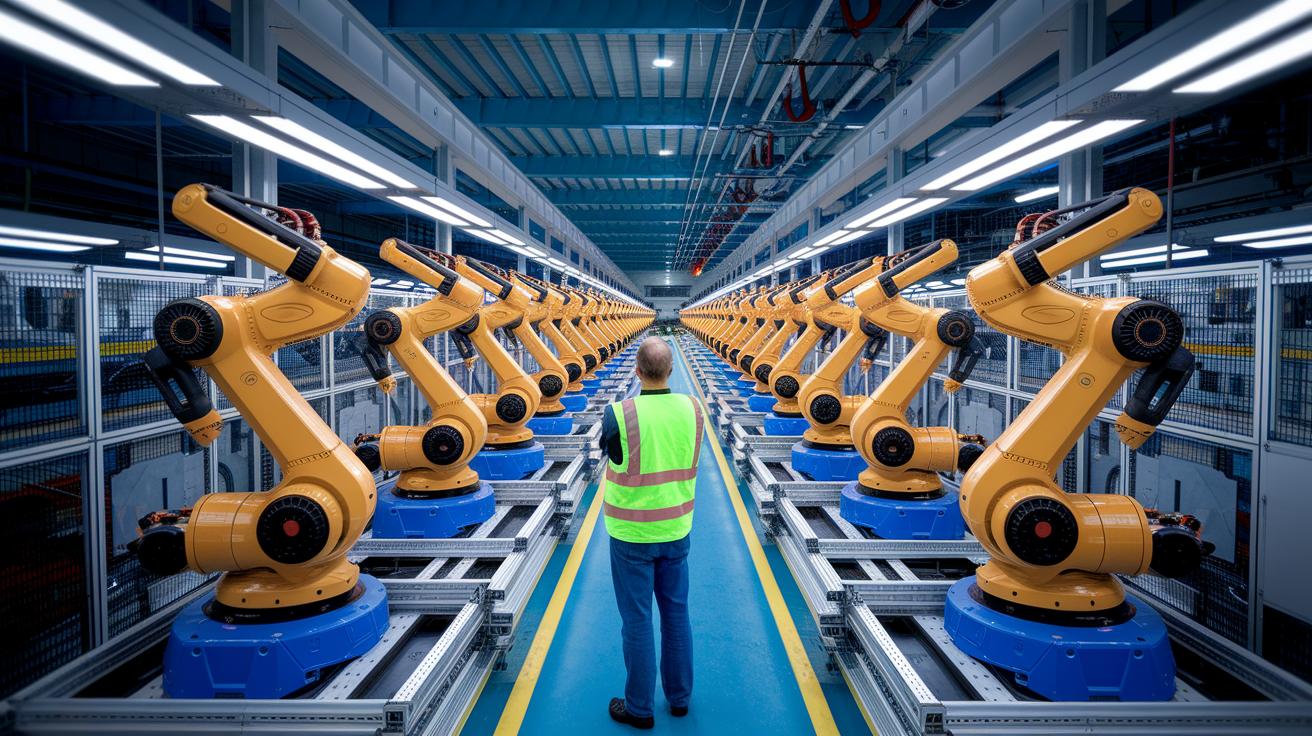

Manufacturing is quietly transforming. AI tools are now an essential part of running production lines smoothly, reducing unexpected downtime, and enhancing product quality. By combining modern data analysis with proven techniques, manufacturers can spot potential issues before they become costly delays, optimize their supply chains, and build better products. This practical blend of innovation and time-tested methods is reshaping operations while delivering clear, measurable benefits.
AI Use Cases in Manufacturing: Optimizing Operations, Reducing Downtime, and Improving Quality
Manufacturers are turning to AI to make operations run smoother, cut down on unexpected halts, and keep product quality high. By weaving AI into their traditional systems, companies can better predict demand, improve product design, and sync their supply chains with real-world needs. This smart approach not only speeds up production but also helps prevent costly overstock or shortages.
Older methods sometimes struggle with sudden equipment issues and strict quality checks. AI-driven systems combine live data with past performance to flag potential problems before they interrupt production. For instance, forecasting when machines might fail can directly reduce downtime and lower repair costs. This move toward data-led decision-making brings clear, measurable benefits.
Key AI applications include:
- Demand Forecasting: Accurately predicting customer needs limits overproduction and avoids excess inventory.
- Product Design & Development: Taking into account factors like material type, weight, and compliance requirements speeds up the design process.
- Supply Chain Optimization: Enhancing route planning and supplier choices leads to more efficient logistics and ethical sourcing.
- Quality Control with Defect Detection: Employing machine vision minimizes false alarms and ensures products consistently meet quality standards.
- Predictive Maintenance: Proactively addressing equipment issues can cut breakdowns by up to 70% and reduce maintenance costs by 25%, resulting in improved production uptime.
By adopting these AI strategies, manufacturers can boost efficiency, reduce operating costs, and enhance their competitive edge. Ultimately, this blend of AI and traditional practices transforms everyday challenges into smoother, more productive operations, laying the groundwork for sustainable growth and success.
Predictive Maintenance: AI Use Cases in Manufacturing for Downtime Prevention
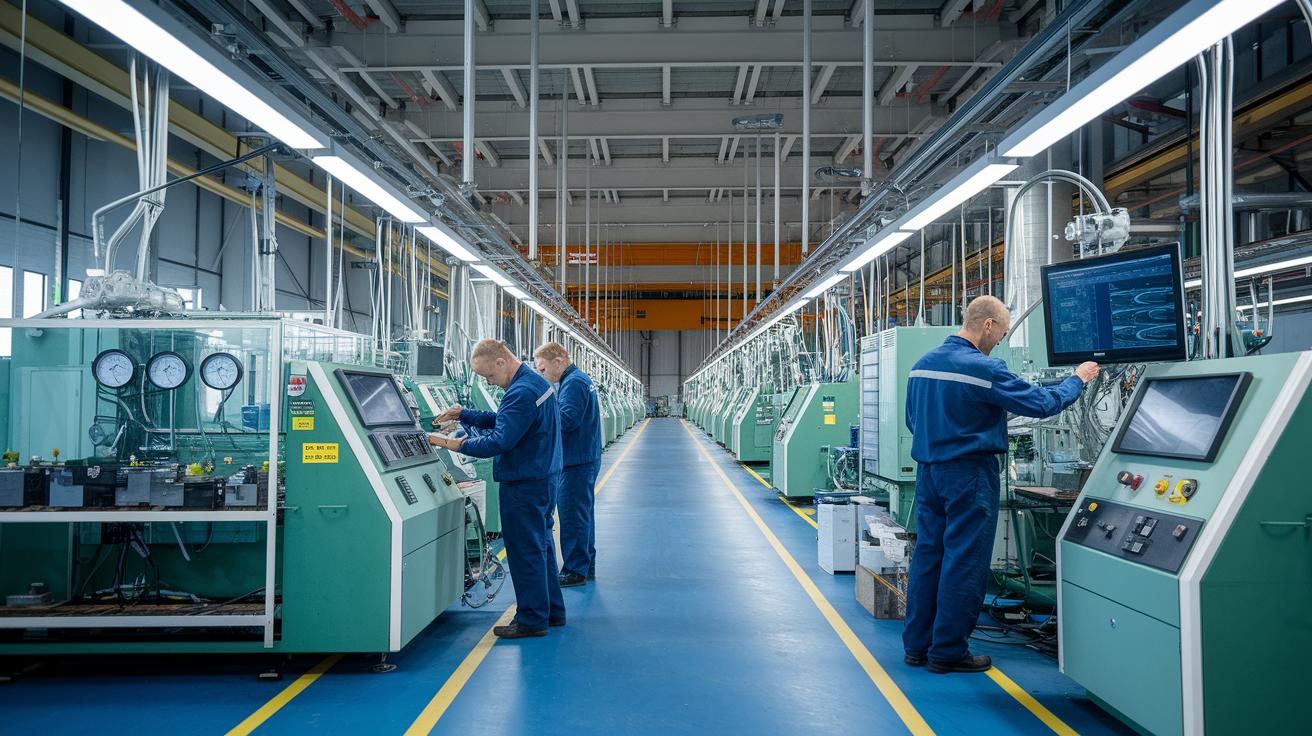
AI-driven predictive maintenance uses sensor data and past maintenance logs to detect problems before they turn into failures. By analyzing real-time machine performance, you can spot early wear and tear, extend the life of equipment, and avoid unexpected breakdowns that cost industries about $4.3 million and 23 productive hours every month.
Key steps in this process:
- Gather sensor data: Install vibration and temperature sensors to continuously record machine activity.
- Train the model: Use historical maintenance records to help your model recognize failure patterns.
- Detect anomalies in real time: Set up monitoring to quickly flag any unusual machine behavior.
- Automate maintenance scheduling: Trigger service orders automatically when the data shows potential issues.
By tracking metrics like uptime, maintenance costs, and production output, companies can see up to a 25% reduction in maintenance expenses and a 25% boost in productivity.
Quality Control with Machine Vision: AI Use Cases in Manufacturing
Traditional visual inspections depend on human expertise, which can lead to inconsistent detection of minor defects and slower production speeds. Manual checks often trigger false alarms and require repetitive work, making it hard to maintain strict quality standards and meet the rigorous demands of modern manufacturing.
AI-driven machine vision tackles these issues by using deep learning to detect defects in real time. This automated approach ensures every product is evaluated using the same precise criteria, drastically reducing false alarms and lessening the need for manual inspections. It also allows for quick model tuning, so manufacturing teams can achieve high accuracy in spotting flaws.
Benefits of this technology include:
- Faster throughput
- Fewer defects
- Consistent quality standards
- Reduced labor costs
- Less material waste
For example, BMW implemented a computer-vision solution that uses convolutional neural networks, a type of deep learning model, to inspect vehicle components. The system identifies issues such as surface scratches, misalignments, and missing parts. As a result, BMW saw improved quality metrics like higher pass rates during final inspections and a decrease in material waste. By automating the visual inspection process, the company not only boosted operational efficiency but also ensured more reliable product quality across its assembly lines.
Supply Chain Optimization: Intelligent Supply Chain AI Use Cases in Manufacturing

Manufacturing supply chains deal with complex issues. Unpredictable demand and sudden disruptions make smooth operations a constant challenge. With many moving parts, managing procurement, inventory, and logistics means using a system that can quickly adjust to ever-changing conditions. AI tools analyze past demand, seasonal patterns, and trends to give planners clear, actionable insights.
- Demand forecasting
- Dynamic reorder planning
- Route and logistics optimization
- Disruption prediction
These methods work together to streamline every stage of the supply chain. AI-driven systems help companies maintain precise inventory control and update orders using real-time market signals. Better forecasting keeps stock levels in line with actual needs, while automated reorder planning helps avoid excess inventory or shortages. Similarly, route optimization cuts transportation costs and improves delivery timings, and disruption prediction lets businesses act swiftly when issues arise.
By adopting these AI strategies, companies can save costs while boosting operational flexibility. The capability to foresee challenges and adjust operations on the fly leads to shorter lead times and happier customers. This approach not only trims expenses from manual oversight and logistics inefficiencies, but it also builds a stronger, more resilient supply chain ready to handle sudden market shifts.
Digital Twin Technology: AI Use Cases for Manufacturing Simulation and Planning
Digital twins are digital copies of real production equipment that help manufacturers test changes, predict breakdowns, and improve production lines without stopping operations. They enable teams to run simulations of factory scenarios, allowing risk-free experiments and detailed process evaluations. For example, Airbus uses AI-powered digital twins to speed up product engineering and cut down on prototyping time. By integrating digital twins into the CI/CD pipeline, teams can update systems quickly and boost overall manufacturing agility.
Digital Twin Simulation Workflows
The simulation process follows three main steps:
- Data ingestion: Gather live sensor data and historical records.
- Virtual modeling: Create a digital replica that mirrors the physical system.
- Result validation: Compare simulation outcomes with actual performance.
| Phase | Description | Benefit |
|---|---|---|
| Data Ingestion | Collect sensor data and historical records from production assets. | Ensures reliable inputs for accurate simulations. |
| Virtual Modeling | Construct a digital twin that closely mirrors the real production system. | Allows risk-free testing and system improvements. |
| Result Validation | Match simulation results to real-world outcomes. | Confirms model accuracy and helps refine future plans. |
Autonomous Robotics: AI Use Cases in Manufacturing with Advanced Robotics Solutions
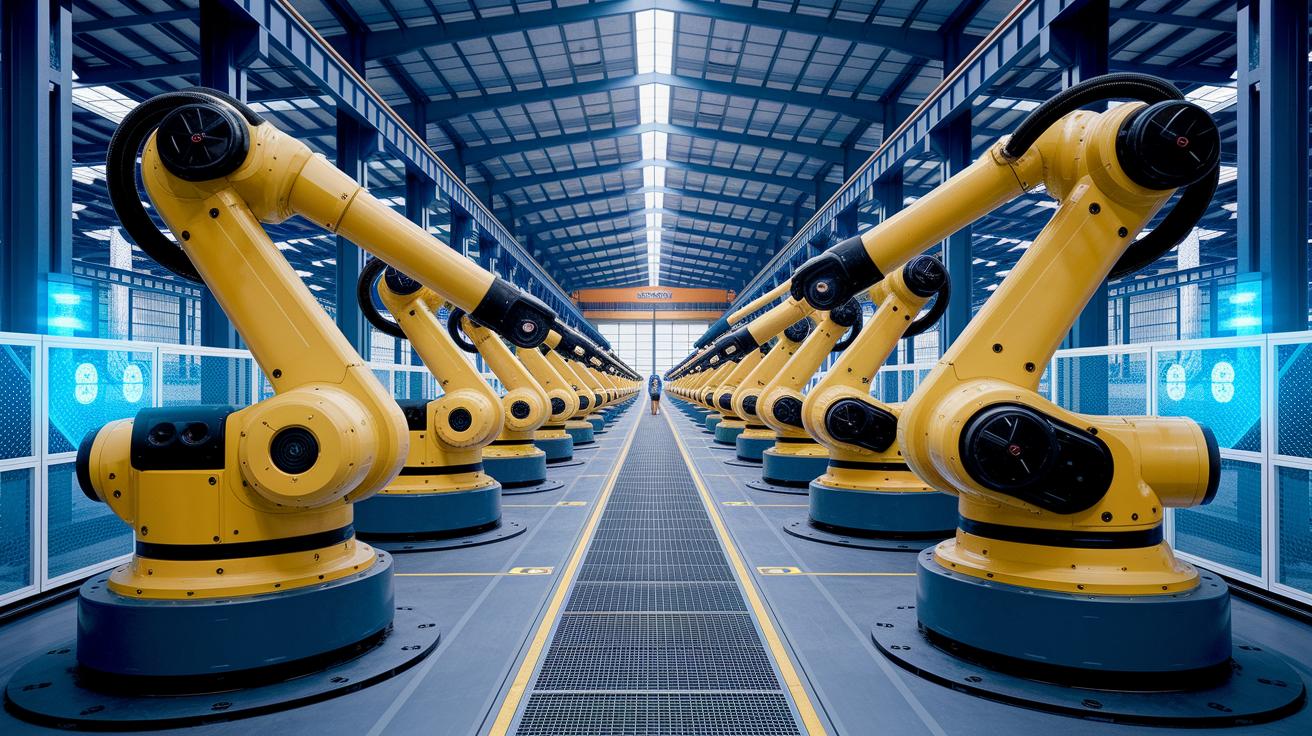
On the manufacturing floor, robust heavy-duty robots handle demanding tasks with exceptional precision. They work with AI tools like ZBrain to quickly identify defects and refine production planning. By automating decisions on assembly and maintenance forecasts, these robots shorten production cycles and reduce the need for constant human oversight. Their sturdy design is perfect for challenging environments where reliability really counts.
Collaborative robots take a different approach by working side-by-side with people and adjusting in real time. For instance, Automated Guided Vehicles (AGVs) use AI to change their routes on the fly, which boosts safety and efficiency in ever-changing factory settings. This mix of smart machines and human workers minimizes disruptions and supports quick decisions, like evaluating suppliers on the spot.
- Siemens predictive-robot maintenance
- Additive manufacturing automation
- AGV route optimization
These examples show how autonomous robotics can play many roles in modern manufacturing. With a smart combination of heavy-duty and collaborative systems, manufacturers can streamline operations, improve productivity, and keep the shop floor safe.
Generative Machine Learning in Product Design: AI Use Cases in Manufacturing
Manufacturing design is more challenging than ever. Modern products must meet strict rules about materials, weight, strength, and regulations. Traditional design methods often struggle to balance these multiple demands while trying to speed up market delivery.
Generative machine learning offers a practical solution. This technology rapidly assesses design parameters, letting engineers experiment with a wide range of design options early in the process. By using core generative frameworks, like those covered in generative AI fundamentals, engineers can explore many variations before choosing the final design.
Key benefits include:
- Faster prototyping: Quickly generate and compare multiple design alternatives.
- Material optimization: Identify the best materials that meet both performance and cost requirements.
- Compliance validation: Automatically check designs to ensure they follow industry rules.
- Performance simulation: Run virtual tests to predict real-world performance.
These capabilities not only help companies meet technical requirements but also drive down costs and shorten time-to-market. For example, Airbus has managed to reduce design cycles by as much as 30% using generative engineering methods. Overall, this approach transforms challenging design issues into efficient, manageable workflows that boost innovation and competitive advantage.
Real-Time Monitoring and Data-Driven Production Efficiency: AI Use Cases in Manufacturing

Sensor networks installed along production lines capture ongoing machine and process data that transform a standard production setting into an analytical workspace. The data flows straight into real-time dashboards that display clear operational metrics, making it easy for teams to spot any irregularities and take fast corrective actions.
Modern dashboards convert raw data into simple visuals that show details such as machine vibrations and temperature changes. By merging live data with historical trends, companies gain both immediate insights and a broader understanding of long-term production patterns. This combined view helps technical teams make timely system adjustments to maintain optimal productivity.
Key benefits of continuous monitoring solutions include:
- Quick detection of anomalies in machine performance.
- Energy optimization by adjusting systems like lighting and HVAC.
- Real-time analytics dashboards that support immediate operational decisions.
Monitoring indicators like production throughput, defect rates, and energy consumption enables operators to implement ongoing improvements. This approach not only supports quick fixes but also builds a reliable foundation for enhancing processes over time.
Best Practices and Governance for AI Use Cases in Manufacturing
Building an AI-driven culture in manufacturing starts with earning trust in your data and being candid about risks. It means investing in upskilling your workforce and making sure everyone understands the importance of risk transparency. With a solid governance framework that covers model validation, version control, and compliance, manufacturers can confidently start their AI initiatives. For instance, companies like Siemens and Airbus weave these controls into their everyday procedures to maintain safety and high quality. By integrating governance through every stage of an AI system’s lifecycle, manufacturers can manage new risks while keeping pace with evolving technology.
- Set clear data standards
- Validate your models thoroughly
- Build reliable deployment pipelines
- Run regular audits
- Provide ongoing staff training
These practices help ensure your data remains accurate, models deliver precise results, and deployments are consistent. A structured oversight process not only cuts down on risk but also fuels continuous improvement, letting manufacturers quickly embrace innovative ideas. In short, a strong governance model turns quality control and regulatory compliance into everyday strengths that drive competitive advantage.
| Practice | Benefit |
|---|---|
| Model Validation | Confirms outputs are reliable and meet quality benchmarks. |
| Deployment Pipeline | Simplifies updates and incorporates continuous improvements. |
| Periodic Audits | Ensures ongoing compliance and adapts risk management over time. |
Final Words
In the action, we explored practical modern techniques designed to optimize manufacturing operations through AI. We highlighted approaches like demand forecasting, predictive maintenance, digital twin simulation, autonomous robotics, and generative design, all delivering measurable performance improvements.
These strategies streamline operations, enhance quality control, and bolster supply chain precision. Embracing these practices sets the stage for better productivity and competitiveness with ai use cases in manufacturing.
FAQ
What are some AI use cases in manufacturing?
The AI use cases in manufacturing include predictive maintenance, quality control, supply chain optimization,
digital twin simulations, and autonomous robotics, all designed to boost efficiency, reduce downtime, and enhance product quality.
What AI use cases do manufacturing companies implement?
The manufacturing companies implement AI in areas such as demand forecasting, real-time monitoring, process automation,
and generative design, which streamline operations and support data-driven decision-making.
What does an artificial intelligence in manufacturing industry PDF typically cover?
The PDF guides on AI in manufacturing detail case studies, technical methodologies, workflow diagrams, and performance metrics
that help professionals understand and implement AI strategies effectively.
What insights does an AI in manufacturing case study provide?
The case study sheds light on practical implementations, performance metrics, and cost-saving benefits, demonstrating how AI integration
can enhance operational efficiency and product quality in a manufacturing setting.
What are examples of generative AI use cases in manufacturing?
The generative AI examples in manufacturing include product design optimization, rapid prototyping, material selection, and regulatory compliance validation,
all of which drive innovation and reduce design cycles.
What are the benefits and disadvantages of using AI in manufacturing?
The benefits of AI in manufacturing include improved productivity, reduced downtime, and higher quality control,
while the disadvantages may involve high initial costs and the need for extensive data management and staff training.