


Is your organization ready to unlock AI’s full potential? Many companies dive in too quickly without checking if they’re truly prepared, which can lead to costly mistakes. A clear AI maturity model offers a step-by-step roadmap that helps you identify areas for growth, manage risks, and integrate AI into your daily operations.
With 86% of top global companies already refining their AI strategies, this framework enables you to track progress and build stronger, data-driven plans. It guides you from initial learning to a strategic transformation, ensuring that every AI project delivers real, measurable value.
AI Maturity Model: Framework Overview for Organizational Adoption
Organizations can use this AI maturity model as a practical roadmap to evaluate and advance their AI initiatives. It offers a clear framework to review current practices, measure the sophistication of AI applications, and plan future integrations. For example, 86% of Forbes Global 50 companies already leverage advanced AI methods to drive real business results. By breaking down AI usage into distinct levels, companies can pinpoint growth opportunities, control risks, and align AI adoption with broader strategic objectives, which ultimately boosts both operational efficiency and competitive strength.
At Level 1 (Awareness), businesses start by learning about AI without putting it to work yet. At Level 2 (Active), they experiment informally by testing ideas in environments like Jupyter Notebooks or using tools such as TF.js. At Level 3 (Operational), AI becomes a routine part of daily operations supported by dedicated teams and infrastructure. At Level 4 (Systemic), organizations strategically reengineer business functions with robust machine learning systems. Finally, at Level 5 (Transformational), AI is deeply embedded into every decision and process, driving innovation throughout the enterprise.
Levels of the AI Maturity Model: Detailed Progression

Level 1: Awareness
At this stage, organizations spot AI as a powerful tool without diving into full implementation. Teams focus on building a solid understanding by studying basic case examples and simple data processing scripts that show what AI can do in its early phases.
Level 2: Active
Organizations begin informal testing by using tools like Jupyter notebooks and TF.js. They run small, controlled experiments to see how machine learning works in practice. This phase involves creating basic models and reviewing results to gain hands-on insights into early AI capabilities.
Level 3: Operational
AI solutions start to become part of everyday operations. Dedicated machine learning engineers work with existing infrastructure to integrate these tools into routine business processes. The goal here is to expand successful pilot projects into reliable, day-to-day functions while keeping innovation steady and systems stable.
Level 4: Systemic
At this level, AI transforms into a strategic asset that reshapes business operations. Cross-functional teams and robust data infrastructures enable regular, data-driven evaluations and collaborative projects. Business units and data teams work together to develop strategic AI solutions that align with overall company goals.
Level 5: Transformational
AI becomes central to decision-making and operational strategies. Organizations achieve widespread integration, using AI insights to drive product development and gain a competitive edge. This stage builds on scaling proven pilots, investing in skilled talent, and improving data management to support continuous, system-wide innovation.
Evaluating Readiness in the AI Maturity Model
Organizations assess their AI readiness by focusing on key areas like data management, infrastructure, talent, and governance. Each of these elements plays a unique role in driving successful AI projects. Data management makes sure quality data is available when you need it, while a robust infrastructure supplies the computational power and integration capabilities necessary for smooth operations. Talent covers the skilled professionals who build, deploy, and maintain AI systems, and governance sets up the policies and compliance checks that keep everything secure and aligned with company standards.
Metrics and privacy concerns give a clearer picture of where an organization stands on its AI journey. For example, while 95% of organizations use static masking, which hides sensitive data, to protect information, only 25% extend these measures to model training environments. Additionally, 78% of practitioners have concerns about data theft during model training, and 60% have experienced breaches in non-production systems. These numbers highlight the areas where strengthening data protection and refining operational practices can help advance along the AI maturity model.
Building Your AI Maturity Model Roadmap
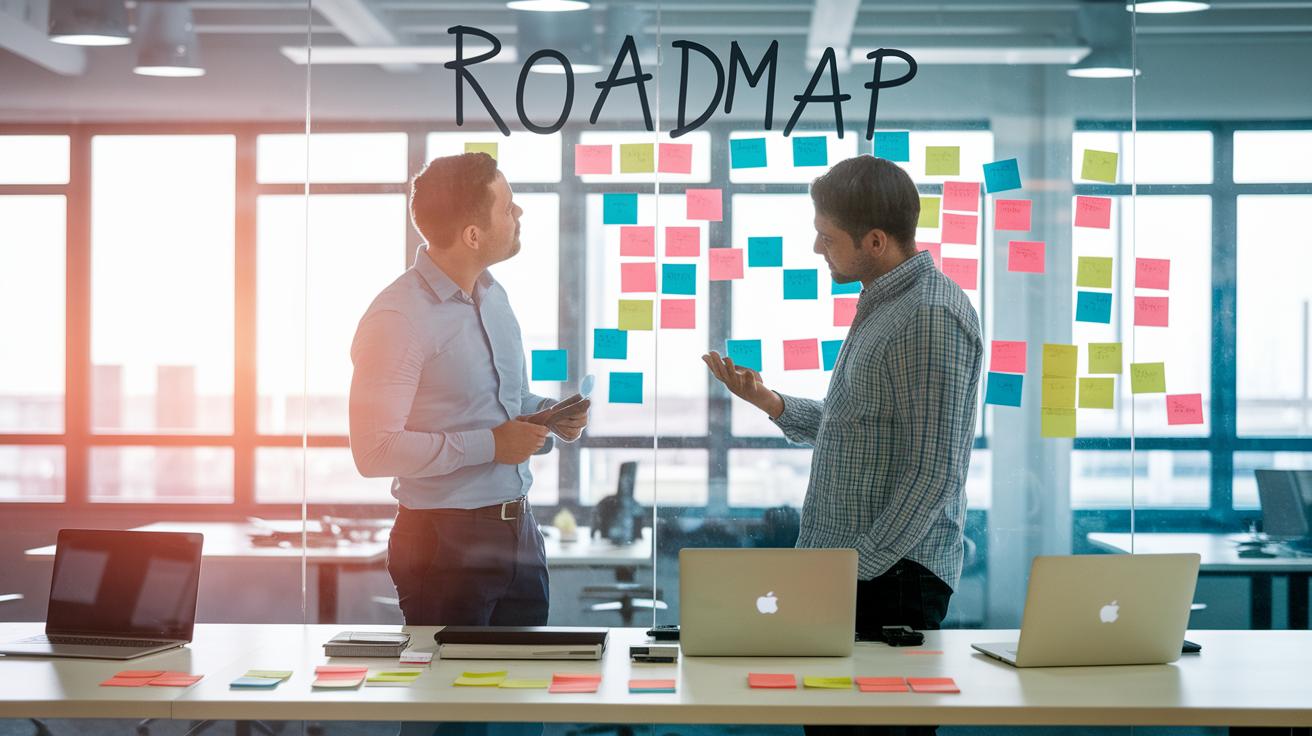
A clear roadmap is key to turning AI into real business results. It helps you streamline processes, anchor decisions in data, and build momentum with steady improvements.
-
Assessment – Start by reviewing your current workflows and data practices to spot areas where AI can make a difference. Look for operational gaps and set clear objectives.
-
Planning – Identify the parts of your business where AI can boost efficiency. Create a strategy that aligns with your main priorities and choose the right tools and techniques for each use case. For extra guidance, check out our guide on building an AI roadmap.
-
Piloting – Test small-scale projects first. For example, use a clustering method like K-means to segment sales, and see how AI can add value. These trials will show you what works in your environment.
-
Scaling – Once your pilots prove successful, begin integrating them into daily operations. Build a strong infrastructure and assemble dedicated teams to manage the growing AI efforts.
-
Governance Integration – Set up policies and oversight to ensure your AI projects meet data privacy standards and maintain high-quality data management. This step keeps your initiatives aligned with overall risk management.
-
Continuous Improvement – Keep an eye on key performance indicators and regularly update your models. This ongoing refinement helps your organization remain competitive and agile.
These steps provide a straightforward path to evolving your AI initiatives from experimental ideas to a vital part of your everyday operations.
ai maturity model Elevates AI Integration Success
Real-world benchmarks offer essential insights into an organization’s AI journey. They clearly show the outcomes from practical deployments. For example, top enterprises that integrate advanced AI and automation see measurable improvements by aligning these technologies with business priorities. One study found that customer segmentation using K-means clustering increased conversion rates by 25% compared to manual methods. In practical terms, a robust AI maturity framework speeds up digital transformation while delivering real business benefits.
Tailored AI solutions need clear performance metrics to measure progress and refine strategies. Such benchmarks act as transparent templates that help organizations of all sizes track their AI initiatives. In this way, benchmarking tools become indispensable for spotting best practices and ensuring enterprise readiness.
Consider a retail company that employed machine learning for dynamic pricing. By combining historical sales data with predictive algorithms, they boosted revenue by 15%. In finance, a bank used anomaly detection to cut fraud risks by 20% after moving away from static rule-based systems. Meanwhile, a healthcare provider adopted AI for patient triaging, which reduced waiting times by 30% through automated data assessments. These examples underline how practical AI applications make a tangible impact across industries.
Governance and Ethics in the AI Maturity Model

Strong governance is key to keeping AI projects secure, compliant, and trustworthy from start to finish. It builds stakeholders’ confidence by ensuring solid data practices and addressing potential risks before they escalate.
Organizations can follow a few practical steps to uphold high governance standards. Start by incorporating ethics reviews early in model development to steer teams toward building responsible AI solutions. Regular audits of data quality and security will help catch issues before they grow, and proactive compliance checks in both testing and live environments can reduce risks. Notably, many organizations have faced incidents in non-production settings, so this extra layer of scrutiny is essential.
Using structured oversight frameworks, as outlined in common AI governance guidelines, provides clear instructions to maintain standards and accountability. These practices ensure ongoing review, protect the integrity of AI solutions, and preserve customer trust.
Final Words
In the action, this post outlined the critical steps for building a robust ai maturity model, covering everything from initial awareness to a fully transformational approach. Each section provided insights into evaluation criteria, pilot testing, and scaling in real-world scenarios.
The guide emphasized clear frameworks, practical metrics, and governance practices. The discussion on each maturity level offers a structured way for organizations to progress while keeping models reproducible and observable. Keep pushing forward with confidence as you evolve your AI strategy into tangible results.
FAQ
What is an AI maturity model template?
The AI maturity model template acts as a framework to assess an organization’s progress from basic awareness to full transformation. It outlines clear stages and performance measures to guide strategic AI development.
What does Gartner’s AI maturity model involve?
Gartner’s AI maturity model provides benchmarks that align digital evolution with strategic AI initiatives. It helps organizations gauge their current position and plan the next steps toward advanced AI integration.
How does McKinsey’s AI maturity model assess progress?
McKinsey’s AI maturity model emphasizes transforming business processes with measurable improvements. It guides organizations in evolving from early experiments to systematic, enterprise-wide AI adoption.
How is Deloitte’s AI maturity model structured?
Deloitte’s AI maturity model integrates advanced analytics with business operations, measuring capabilities and aligning AI strategies to drive sustainable growth across various organizational functions.
Where can I access a Gartner AI maturity model PDF or an AI maturity model PDF?
The Gartner AI maturity model PDF provides detailed benchmarks and insights, while other AI maturity model PDFs offer general templates and frameworks for assessing the level of AI adoption in organizations.
What defines the MITRE AI maturity model?
The MITRE AI maturity model offers a structured approach to evaluate AI readiness by examining technological capabilities and aligning practical, performance-based criteria with business objectives.
What is Microsoft’s AI maturity model?
Microsoft’s AI maturity model measures progress across data management, infrastructure, and talent. It helps organizations advance from initial experiments to fully integrated, operational AI systems.