

Ever wonder if your machine learning models really meet all compliance standards? Recent insights reveal that more than half of professionals cite governance as the toughest part of production, turning risk management into a real challenge.
By combining model governance with MLOps (the practice of automating all stages of ML model development), you can set up regular checkpoints to meet regulatory standards and monitor performance continuously. This practical approach not only minimizes risk but also builds transparency throughout the model lifecycle, setting you up for smoother, more reliable automated pipelines.
Integrating model governance with MLOps for compliance and continuous monitoring
Integrating model governance with MLOps forms a strong system that tackles the real challenges of production machine learning. This combined approach helps ensure your models meet regulatory standards, reduces operational risks, and supports ongoing performance tracking. It gives your team clear checkpoints for managing risk and maintaining transparency throughout the entire ML lifecycle.
Recent surveys show that 56% of professionals find governance one of the toughest parts of moving models to production. Additionally, 26.2% of companies worry about compliance risks, and 35.8% face issues related to legal transparency. These figures underscore the urgency of embedding solid governance practices into your automated pipelines.
A critical step in this integration is aligning with established risk classifications like those defined by the EU AI framework. This framework sorts systems into four risk categories. Category 1 covers applications with an unacceptable level of risk that are not allowed; Category 2 includes high-risk systems that must meet strict standards for accuracy, training data quality, accountability, and conformity testing; Category 3 is for limited-risk systems that need transparency measures; and Category 4 represents minimal-risk systems with fewer regulatory requirements.
Mapping these risk levels to your MLOps practices enables you to apply clear, measurable governance steps. This alignment not only streamlines continuous performance monitoring but also promotes a proactive culture of risk management, helping to prevent compliance issues before they can affect production.
Model governance frameworks and standards in MLOps pipelines
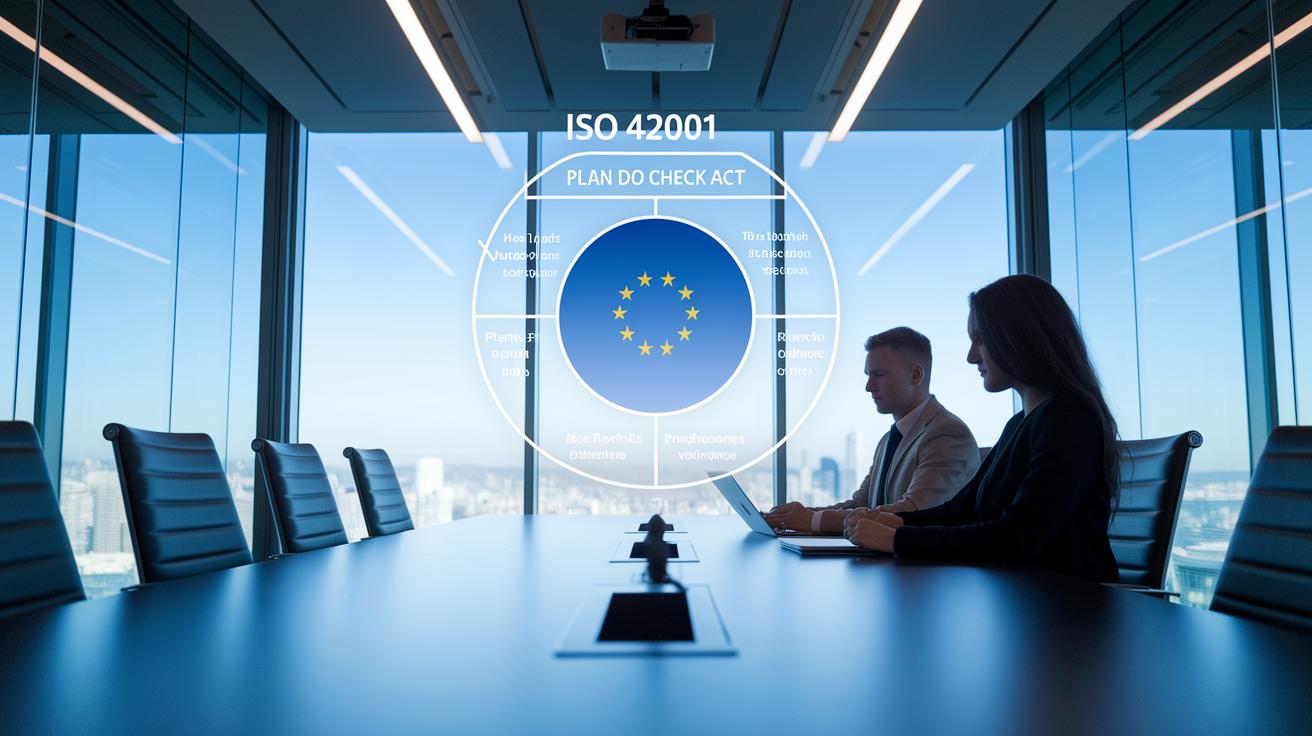
Embedding strong governance in your MLOps pipelines is essential for keeping track of model decisions while upholding ethical data practices. One widely recognized standard, ISO 42001, outlines key elements like risk management, impact assessment, lifecycle management, and continuous improvement through a simple plan-do-check-act cycle. This framework makes it easier to integrate AI governance and sets up clear checkpoints that ensure machine learning models are both robust and reproducible. For further details, please refer to the model governance frameworks for AI at aiinsightguide.com?p=234.
The EU AI Act builds on this foundation by sorting applications into four risk categories. For example, high-risk systems must meet strict accuracy requirements, use reliable training data, and demonstrate accountability and transparency. These systems go through rigorous conformity testing and must be fully auditable to receive CE marking. Including these compliance steps within your pipelines helps create a structure that automatically validates model performance and regulatory adherence.
By applying both ISO 42001 and the EU AI Act’s risk classifications, teams can develop pipelines that proactively manage risks and monitor performance. This approach ensures that every model not only meets industry standards but also complies with legal obligations before it reaches production.
Governance tools to integrate with MLOps pipelines
Integrating governance tools into your MLOps pipeline boosts transparency, security, and auditability during model deployment. For example, the Model Card Toolkit lets you create clear documentation that outlines your model’s purpose, key performance metrics, and any limitations. Think of it as a concise report that captures your model’s training history and performance context.
To catch any bias early, AI Fairness 360 and Fairness Indicators are invaluable. These tools run automated compliance tests within your digital workflow so you can quickly spot discrepancies in how different user groups are treated. This proactive approach helps ensure you address fairness issues before they become problematic.
For a thorough audit trail and metadata management, Apache Atlas and DataHub are excellent choices. They track every change in your data and code, enabling robust version control throughout model iterations. Keeping detailed logs of model retraining activities is essential for maintaining compliance and facilitating troubleshooting.
Additionally, SHAP and LIME provide interpretable insights into your model’s decisions. They help you understand which features most influence a prediction, supporting clear audit mechanisms for policy adherence. This level of transparency is especially important as cyber threats targeting machine learning systems continue to rise.
Together, these tools create an ecosystem that automates governance checks, enforces compliance, and maintains consistent version control, ensuring that your production pipeline is secure, transparent, and reliable.
Embedding governance checkpoints in your MLOps workflow

Integrating governance checks into your MLOps process is essential for keeping your models compliant and under control. Automated tests run through CI/CD platforms like Jenkins and GitLab CI/CD help monitor every stage of model development. These tools execute tests, validate models, and block deployments that don’t meet set governance standards.
Using Data Version Control (DVC) together with Git lets you track data, code, and models in one place while producing detailed audit logs. For example, running the command "dvc repro" ensures that every pipeline step functions as expected. Adding configuration management to your neural processes records changes and makes sure reviews are completed before moving to production.
Automated compliance checks at key points help prevent unauthorized deployments. These process safeguards allow teams to roll out secure, consistent updates. By incorporating governance measures throughout the change management process, you reduce risks and maintain accountability by checking performance metrics, safety benchmarks, and regulatory standards. This approach builds a clear, reliable workflow from development to production, turning risk management into a strategic asset.
Continuous monitoring and performance oversight in governance-driven MLOps
Integrating continuous monitoring into your MLOps pipeline is essential for keeping your systems reliable in regulated environments. Tools like Prometheus, Grafana, and Boxkite help you track model performance in real time and spot even small shifts in data. You can set clear thresholds and automatic alerts using metrics such as KL divergence (measuring how one probability distribution diverges from a second) and the Kolmogorov-Smirnov test (a method for comparing distributions). For example, you might set an alert to trigger when the KL divergence increases by 0.05 compared to the baseline.
Choosing the right metrics is key to managing risk in automated workflows. Make sure you establish indicators that cover not just accuracy and loss, but also fairness and any signs of performance decline. Here are some practical steps to follow:
- Define a baseline metric profile for each model.
- Set up real-time dashboards that update continuously.
- Configure automated notifications for any detected drift or anomalies.
In addition, it’s important to include anomaly detection workflows. These systems regularly compare incoming data with historical benchmarks, automatically flagging any deviations that could introduce risk or bias. By setting up notification channels like emails or system alerts, your team can quickly respond to potential issues. This proactive approach ensures your models stay reliable and compliant throughout their lifecycle, preventing risks from impacting end users.
Real-world MLOps governance integration case studies
Several organizations, including Roche, iFit, and Anheuser-Busch InBev, have demonstrated clear business benefits by incorporating strong model governance into their MLOps practices. For example, Roche rebuilt its machine learning pipeline to include strict governance checks. By automating audit trails and continuously managing risks, Roche not only spurred triple-digit growth but also improved scalability while ensuring every model met regulatory standards. One remark from their process highlights this shift: "Early integration of compliance checkpoints turned risk management into a strategic asset."
Similarly, iFit refined its lifecycle management for intelligent applications by embedding governance at critical points in its deployment pipeline. This method cut down operational risks, enabled more frequent model retraining, and boosted productivity through the use of solid governance metrics.
Anheuser-Busch InBev took a process automation approach in cognitive computing to secure operational resiliency for smart models. By integrating governance across their entire MLOps framework, they quickly broadened their service offerings and increased their market presence. Their efforts resulted in steady improvements in performance and safer scaling practices.
These cases collectively show that using practical strategies such as automated validations and continuous feedback loops is crucial. Integrating governance into MLOps pipelines not only helps in meeting compliance but also lays the foundation for building robust, scalable systems geared for long-term success.
Best practices for model governance within MLOps deployment
Keep your governance strategy lean and flexible by addressing model risk and bias as they happen. Modern methods now apply real-time drift checks, automated risk scoring, and clear explainability dashboards to reveal insights that older systems miss.
New approaches include:
- Policies that adjust dynamically when drift is detected.
- Automated audits that update fairness scorecards as conditions change.
- Risk scoring systems with detailed logs to ensure full traceability.
For example, a snippet like "if (modelDrift > threshold) { alertReview(); }" shows how an automated check can quickly trigger an in-depth review when needed.
| Practice | Example |
|---|---|
| Real-time Drift Detection | A system that sends an immediate alert when a significant drift spike occurs. |
| Ethical Audit Integration | Automated fairness assessments that adjust governance metrics in real time. |
| Dynamic Risk Scoring | Dashboards that refresh risk scores as new data from audits becomes available. |
Final Words
In the action, we reviewed a step-by-step framework for integrating model governance with MLOps. The post outlined how to embed governance checkpoints, adopt compliance standards like ISO 42001, and implement risk controls using practical tools. Small case studies and best practices provided tangible evidence of streamlined deployments and continuous monitoring.
This guide reinforces the significance of integrating model governance with MLOps for building reproducible, scalable, and secure production environments. Embrace these strategies for reliable, compliant, and future-proof ML systems.